
News from The Discovery Channel: “Treatments for depression range from medicines that can come with scary side effects to electric shock therapy, but a new paper suggests a simple cold shower might sometimes cure, and even prevent, the debilitating mood disorder.” Now I understand why I always feel so uplifted and, well, happy, after my morning cold shower gush. Continue reading
Triumph Over Diagnosis
If you’ve ever heard a doctor deliver bad news, everything about that moment is probably seared into your brain with a permanence that rivals the moment you heard that Kennedy had been shot (if you’re that old) or the Towers had been hit (if you’re not.)
Is it because our doctors are the white-robed, high priests of medicine that their every word, frown, or raised eyebrow has the power to plunge us into the depths of despair? Is this why we scrutinize their phrases and mannerisms for clues about the future of our bodies?
Of course doctors — despite the mystique surrounding them — aren’t the high priests of medicine and they don’t have ultimate knowledge about our destinies. As one very wise doctor once told me, “a diagnosis — or a prognosis — for that matter, is just an opinion.” A well-informed opinion, to be sure, but not one that is carved in stone. If I had believed the neurologists who told me twelve years ago that I would probably never walk or fully use my left arm again, I’d be an invalid today. If my friend Janet had believed the oncologist who told her that she had one year to live, she would not now — ten years later — be writing her memoirs and enjoying her grandchildren.
The stories of triumph over diagnosis go on and on, and every time I hear or write about another one, I am awed anew at the power of the human spirit to overcome medical calamities that look hopeless. When I woke up from surgery with my half my body paralyzed by a stroke, what I thought was a calamity actually turned out to be a gift: It taught me something about myself and launched me on a new professional path. On this path, I have been privileged to meet and write the stories of courageous people who chose to disobey their diagnoses and to forge their own destinies of healing. Their very existence gives hope to all of us.
Of course we need our doctors. They are trained to make diagnoses. But they are not infallible. We should temper their opinions with what we know about ourselves. And they in turn need to recognize that their words are powerful influences on our bodies, minds and spirits, and they should be chosen wisely. We want our doctors to tell us the truth as they see it, but we also need them to be our partners in hope. Because, after all, neither they nor we really know what the future holds.
Cold, Happy Half Bath
“Traditionally, cold sitzbaths — also called happy half baths — have been recommended against hemorrhoids, varicose veins and infertility (of both sexes),” says board-certified internist and expert in European Natural Medicine Alexa Fleckenstein, MD. “Taken in the evening, they work against insomnia. Done regularly, they promote immune health and disease resistance, similar to cold showers. I take mine because I want to emulate the wonderful feeling I have when I swim in the cold waters of Maine in the summer; my cold sitzbath in the morning leaves me with the same elation and freshness, geared for another strenuous day.”
The name “sitzbath” is a halfway translation from German into English: The original word is “Sitzbad”. “Sitz” means “to sit” and “bad” is “bath”. Dr. Fleckenstein advises that a cold sitzbath should not be done for more than a few seconds. You should not feel cold afterward – just energized and really warm within a few minutes. And never do any cold water treatment on a cold body – Rule Number One in all hydrotherapy. “Let cold water run into a clean bathtub – two to three inches is enough,” says Dr. Fleckenstein. “Sit. Don’t forget to splash – it’s fun! Get out and towel off. That’s all. Some hardy people recommend skipping the toweling in the evening and going into bed wet, promoting sleepiness.”
While sitzbaths have a long tradition in European Natural Medicine, there is not much sound research evidence. “However,” says Dr. Fleckenstein, “my patients have benefited. As is the case with many natural therapies, studies have not been done because there’s no money to be made. Nobody can make a buck if I sit for a few seconds in cold water in my tub!”
Contraindications from Dr. Fleckenstein: “Don’t do a cold sitzbath during an acute urinary tract infection, acute back pain and any acute disease. And always check with your doctor first.”
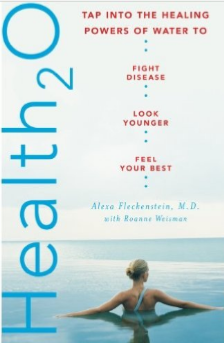
For more information on cold, warm and hot baths, see her book, Health20.
Filed under cold shower health benefits, Healing, Health, Water
Hollywood Reveals the Dark Side of Academic Medicine
The movie Wit, starring Emma Thompson, is a scathing indictment of the dark side of academic medicine. A woman with advanced, metastatic ovarian cancer is offered a powerful experimental chemotherapy protocol that is accompanied by debilitating side effects. Her doctors, passionate about vanquishing the cancer cells, seem indifferent to the fragile emotional state of the person who is housing those cells. (“She’s tough— She can take the full dose of chemo.”) They focus intently in fluid input and output, size and spread of the cancer and the extent of the damage to her remaining healthy organs. They see her body as the battleground upon which will be decided their own medical defeat or victory. And, oh yes, also as the source of new knowledge in the fight against the enemy. The only compassion comes from her primary nurse, who sees beyond the ravaged body and offers healing to the soul within.
Academic medicine and biomedical research have made tremendous, lifesaving contributions to the diagnosis and treatment of disease. What this movie illustrates is, however, is the difference between “curing” and “healing.” There can be healing even without cure. We can become whole and at peace when faced with incurable chronic or terminal illness, and we should not be afraid to ask our doctors to accompany us on that journey.
Herbs for Health
Here are some herbs that will help you have stay healthy, especially during winter. My expert is Alexa Fleckenstein, MD, author of Health2 0 and Healthy to 100. Here is what she told me:
“Herbs have been with us throughout evolution. They fit into our ancient physiology like a key into a lock. In prehistoric times, we always ate herbs from the wild. In modern life, a bitter green or strong root might just be what your body needs to find its way back to balance.”
Unlike the new “superbugs” that are resistant to antibiotics, bacteria and viruses do not easily develop resistance against herbs, says Dr. Fleckenstein. That is because a single herb contains hundreds or more of compounds, and many of these compounds work on killing off the germs. Since point mutations in bacteria can only develop one by one, it is highly unlikely that an herb becomes ineffective against a pathogen, because there will always be plenty of compounds to destroy the microbes first.
“The word for these compounds working together is synergy,” she explains. “Synergy is the reason why I recommend whole herbs (tinctures or so-called phytocaps with extracts of the whole plant) instead of ‘taking the best’ from several pants, and making a patented medicine. Patent medicines exist because natural plants can’t be patented, and so firms try to make money by taking single compounds from a plant, combining it with other single compound, thus producing a ‘new’ medicine which allegedly is better. The truth is that in many cases it is not better because you cannot improve on nature.”
So what does Dr. Fleckenstein recommend that you have on hand this winter in case illness strikes?
For colds and flu: echinacea, osha, pau d’arco, olive leaf, elderberry
For simple urinary tract infection: Uva ursi, usnea, cranberry. (Drink lots of warm water, too.)
For indigestion: dandelion, peppermint, milk thistle. (And think of cleaning up your diet!)
For cough: horehound, echinacea, linden flowers
For insomnia: valerian, hops, passionflower
Important caution: Always check with your doctor before taking any herb, since there could be dangerous interactions with other medicines you are taking!
For more information, check out her books (which include not only advice about herbs, but also about cold water, nutrition, movement and life balance). Another great resource is The Green Pharmacy, by ethnobotanist James Duke.
Filed under colds and flu, Healing, Health
Restoring the Rhythm of the Body
If your health problems include chronic pain in your joints or back, headaches, or ear infections, you might benefit from a craniosacral therapy — after consultation with your doctor, of course. During a session of craniosacral therapy, you lie on your back, fully clothed, on a cushioned table. As the practitioner places her hands under your back on the connection between your head and neck, there is no sensation of “forcing” a movement. “I try to detect and focus on the deepest reservoir of the body, below the ‘radar’ of the conscious mind and even of the muscle,” says Dr. Eurydice Hirsey in Own Your Health—Pain: back pain, arthritis, migraines, joint pain and more, by Adam Perlman, MD, MPH. “I often just follow the body’s own impulse, gently helping it to undo the resistance in its own way, without pushing on the muscles or joints,” says Dr. Hirsey, a chiropractor who is also trained in craniosacral therapy. “This is how craniosacral work differs from chiropractic or even massage, where the practitioner might force or create a change in the body. It is the patient’s own response to the practitioner’s gentle touch that provides the release.”
When the muscle resistance does finally relax, the sensation is one of deep release from a tension you might not have been aware of. “For some people this can be an enormous, sometimes volcanic release,” said Dr. Hirsey. “They may cry, laugh or feel anger, often depending on whether the physical restriction in the body came from an emotional trauma.”
Craniosacral therapy, which can be performed by other practitioners, such as chiropractors, massage therapists, nurses and physical therapists, grew out of the system of osteopathy and treats the central nervous system and its relationship to the spinal cord in a similar way. Practitioners say that craniosacral “rhythm” within the body comes from the regular pulsing of the liquid — called cerebrospinal fluid — that bathes, nourishes and protects the spinal cord. It is through the regular pulses of the cerebrospinal fluid that the brain transmits nerve messages to keep the body alive and functioning.
Blockages or restrictions in the craniosacral fluid can result from tension in the muscles or “fascia,” the tissue just under the skin that overlies muscle and some organs, like a kind of inner “sleeve,” says Dr. Hirsey. “As I place my hands on the spine and head of my patient, I can often feel enormous resistance to the flow of cerebrospinal fluid, caused by blockages in the tissue,” she explains. “Any injury or trauma that alters or minimizes the flow of this fluid can cause pain and have a negative effect on our well-being and health.”
No matter who the practitioner is, the most important component in effective treatment is that the practitioner take into account the condition of the entire body, and that the technique is never used to replace necessary conventional treatment.
What’s the Evidence?
No controlled trials of craniosacral therapy seem to exist, according to one author, Dr. Edzard Ernst, who surveyed the literature, pointing out that Dr. Upledger himself, an osteopathic physician who developed the technique, does not cite them in his own writing. “Even though small movements between cranial bones are possible, there is no good evidence to suggest that restrictions of these movements have any health related relevance,” writes Ernst. -Ernst, Edzard, ed. The Desktop Guide to Complementary and Alternative Medicine: An evidence-based approach. Harcourt Publishers Limited 2001. P. 48.
However, practitioners, patients and parents claim that the technique is beneficial for problems such as birth trauma, chronic pain, cerebral dysfunction, cerebral palsy, colic, depression, dyslexia, ear infections, headaches, learning disabilities, Méniere’s disease, musculoskeletal problems, migraine, sinusitis and stroke. Young children are believed to respond particularly well. Personally, I have found regular craniosacral treatments helpful in dealing with the chronic musculoskeletal pain of Marfan Syndrome.
Would You Eat Better and Exercise for a Trillion Dollars?
That’s at least how much this country could save in health care costs and worker productivity if people lived healthier lives and if the health care system helped them do it.
A recent national study announced in a press release by the Milkin Institute reported that 40 million cases of seven chronic diseases — cancers, diabetes, heart disease, hypertension (high blood pressure), stroke, mental disorders and pulmonary (lung) conditions — could be prevented in the year 2023. How? By re-orienting the focus of health care resources more toward prevention and early detection of disease, rather than focusing primarily on treatment. In other words, let’s head off disease before it happens, rather than waiting until we get sick.
The study concluded that this would reduce anticipated treatment expenses associated with the seven diseases and improve productivity by $1.1 trillion that year. The report notes that the most important factor is obesity, which if rates declined could lead to $60 billion less in treatment costs and $254 billion in increased productivity. We know from other sources that the obesity epidemic in this country is already leading to an alarming increase in Type II diabetes — not only in adults, but in children as well.
To reduce the human and economic cost of disease, the Milken Institute calls for:
• More incentives to promote prevention and early intervention, and
• A renewed national commitment to achieve a “healthy body weight.”
“By investing in good health, we can add billions of dollars in economic growth in the coming decades,” said Ross DeVol, Director of Health Economics and Regional Economics at the Milken Institute and principal author of the report. “The good news is that with moderate improvements in prevention and early intervention such as reducing the rate of obesity, the savings to the economy would be enormous.”
We have been hearing from our doctors for years that that by choosing more nutritious food, exercising regularly and reducing the stress in our lives, we can take significant steps toward improving our health as well as preventing disease, suffering and premature death. Now, policy think tanks, government agencies and insurers are telling us that we can save money as well.
So what is stopping us?
The World Within: An Ultrasound Tour of Pregnancy
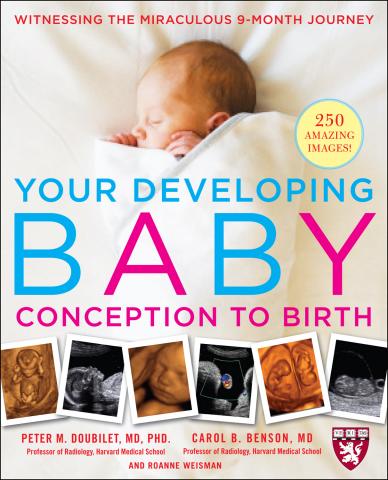
A new book coming out this spring will offer a detailed “tour” of pregnancy, from conception to birth, using 2D and 3D ultrasound images. Your knowledgeable tour guides are two radiology professors at Harvard Medical School, Peter M. Doubilet, M.D., Ph.D., and Carol B. Benson, M.D. I had the privilege of helping them write this book, and learned a great deal in the process, especially from the original diagrams — drawn by Dr. Doubilet — that make it easy to understand the ultrasound pictures. However, the striking 3D images of the face and body hardly need explaining! You can learn more about the book, called “Your Developing Baby,” and see some of the images here. A great Mother’s Day present for any mother-to-be.
Filed under Doctors, Health, Pregnancy, Ultrasound
Using the Mind to Free the Body
A lesson in the Alexander Technique is one of effortless ease — almost as if you were floating without the pull of gravity. You want to package up that floating feeling, carry it off with you, and release it the next time you need to trudge up a flight of stairs. If you have the patience to stick with the lessons, you eventually learn to do just that.
I used the Alexander technique as part of my recovery from a stroke, and also as a way to deal with the muscle and joint discomfort of Marfan syndrome, an inherited disorder of the connective tissue.
Developed by a Shakespearean actor named Frederick M. Alexander at the turn of the 20th century, the Alexander Technique has become a way to promote effortless movement in all activities.
The Alexander Technique is based on three main principles:
-Function is affected by use;
-The organism functions as a whole;
-The relationship of the head, neck and spine is vital to the organism’s ability to function optimally;
What is it used for?
Conditions most frequently treated include chronic pain, osteoarthritis, stress and headaches. While there is limited research, it has been found to be effective for these conditions, as well as Parkinson’s disease, breathing problems and anxiety. It is also common for musicians, dancers, singers and actors to use the technique to improve their performances onstage.(See Own Your Health for research citations.)
For more information: http://www.ati-net.com/
Filed under Alexander Technique, Chronic Pain, Healing, Health, Marfan Syndrome, stroke
A Mystery With Many Names
Do you believe that you are only the total of your physical parts: the bones, muscles and internal organs, and the cells and molecules that make them up? Some people — and I am one of them —argue that there is something more, something invisible — which might be called the soul or spirit — that exists within us as well. This question is important in any discussion of complementary and alternative health practices because most, if not all, of these treatments are based on the second premise: the belief that there is, in fact, some non-material “life force” within us that is the essence of our personalities and that may also play an important role in the health of our bodies.
This hard-to-define and mysterious quality has many names in different cultures. Practitioners of Traditional Chinese Medicine — a system that is thousands of years old — call this energy Qi (pronounced “chi”). It is believed that Qi — which is also thought to pervade everything in the universe — pulses through our bodies, much like the blood, through invisible but well-mapped pathways called “meridians.” Blockages in the flow of Qi lead to disease or pain, and much of Chinese medicine is directed to removing these blockages, freeing the flow of energy so that the body can heal itself.
The belief in a “universal life force” has been present throughout recorded human history. More than five thousand years ago, Ayruvedic healers and yogis in India referred to Prana as energy that, like the Chinese concept of Qi, is not only within us, but also in the world around us. The Japanese word for life force is “Ki.” The ancient Egyptians called it ‘Ka,’ and the Hawaiians ‘Mana,’ In these cultures, people believe that healers can direct and restore these healing forces to cure disease and relieve pain.
Something to think about.
Filed under Chronic Pain, Healing, Health, Traditional Chinese Medicine


 Own Your Health