Tag Archives: complementary medicine

Using the Mind to Free the Body

A lesson in the Alexander Technique is one of effortless ease — almost as if you were floating without the pull of gravity. You want to package up that floating feeling, carry it off with you, and release it the next time you need to trudge up a flight of stairs. If you have the patience to stick with the lessons, you eventually learn to do just that.
I used the Alexander technique as part of my recovery from a stroke, and also as a way to deal with the muscle and joint discomfort of Marfan syndrome, an inherited disorder of the connective tissue.
Developed by a Shakespearean actor named Frederick M. Alexander at the turn of the 20th century, the Alexander Technique has become a way to promote effortless movement in all activities.

The Alexander Technique is based on three main principles:

-Function is affected by use;
-The organism functions as a whole;
-The relationship of the head, neck and spine is vital to the organism’s ability to function optimally;

What is it used for?
Conditions most frequently treated include chronic pain, osteoarthritis, stress and headaches. While there is limited research, it has been found to be effective for these conditions, as well as Parkinson’s disease, breathing problems and anxiety. It is also common for musicians, dancers, singers and actors to use the technique to improve their performances onstage.(See Own Your Health for research citations.)

For more information: http://www.ati-net.com/

4 Comments

Filed under Alexander Technique, Chronic Pain, Healing, Health, Marfan Syndrome, stroke

A Mystery With Many Names

Do you believe that you are only the total of your physical parts: the bones, muscles and internal organs, and the cells and molecules that make them up? Some people — and I am one of them —argue that there is something more, something invisible — which might be called the soul or spirit — that exists within us as well. This question is important in any discussion of complementary and alternative health practices because most, if not all, of these treatments are based on the second premise: the belief that there is, in fact, some non-material “life force” within us that is the essence of our personalities and that may also play an important role in the health of our bodies.

This hard-to-define and mysterious quality has many names in different cultures. Practitioners of Traditional Chinese Medicine — a system that is thousands of years old — call this energy Qi (pronounced “chi”). It is believed that Qi — which is also thought to pervade everything in the universe — pulses through our bodies, much like the blood, through invisible but well-mapped pathways called “meridians.” Blockages in the flow of Qi lead to disease or pain, and much of Chinese medicine is directed to removing these blockages, freeing the flow of energy so that the body can heal itself.

The belief in a “universal life force” has been present throughout recorded human history. More than five thousand years ago, Ayruvedic healers and yogis in India referred to Prana as energy that, like the Chinese concept of Qi, is not only within us, but also in the world around us. The Japanese word for life force is “Ki.” The ancient Egyptians called it ‘Ka,’ and the Hawaiians ‘Mana,’ In these cultures, people believe that healers can direct and restore these healing forces to cure disease and relieve pain.

Something to think about.

Leave a comment

Filed under Chronic Pain, Healing, Health, Traditional Chinese Medicine

Got Milk? For Some Children, the Answer Should Be “No!”

“For some children, the possible adverse health effects of cow’s milk outweigh the benefits, despite what the dairy industry would have us believe,” asserts Stanford University pediatrician John D. Mark, MD.

In his new book, Your Sick Child, part of the Own Your Health series about combining alternative and conventional medicine, Dr. Mark refers to research showing that cow’s milk and dairy products, due to their saturated fat content, can increase inflammation in the airways and other parts of the body. “This inflammation may exacerbate asthma, ear infections, upper respiratory infections and colds,” explains Dr. Mark, an expert on the lung diseases of children. “I regularly try an elimination diet of cow’s milk, cheese and butter from my patients’ diets, and often there is a dramatic improvements in their respiratory problems.”

What about calcium and strong bones? “There are other and often more nutritional ways to get calcium, vitamins and protein, including green leafy vegetables, nuts, calcium-fortified juices, cereals, beans, sesame seeds, almonds, figs, seaweeds, and fortified soymilks,” says Dr. Mark. “We are the only species that drinks milk from another species, and the only species to drink milk at all after infancy. Many children – and adults as well – have trouble digesting cow’s milk. Many children are simply not biologically meant to drink it.”

5 Comments

Filed under asthma, children's health, colds and flu, ear infections, Health

Take a Cold Shower to Protect Against Colds and Flu This Winter

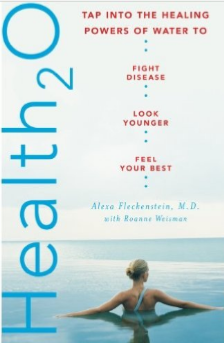
At first, it sounds crazy – can a cold shower really prevent colds and flu? But Dr. Alexa Fleckenstein, author of HEALTH 2 0: TAP INTO THE HEALING POWERS OF WATER TO FIGHT DISEASE, LOOK YOUNGER, AND FEEL YOUR BEST (McGraw-Hill 2007) says that a few seconds of cold water after your hot shower is scientifically proven to make you healthy – even if you’re in the cold water for less than 30 seconds a day.

Here are 6 ways that a short cold shower protects you from colds and flu:

1. A brief cold water shower will decrease your body’s “reaction time” to cold. The cold shower “teaches” the blood vessels in your skin to clamp down faster, so you are losing less warmth in draft or cold exposure. Especially, during the winter months while it’s cold outside, you’ll stay warmer, longer.

2. Gamma interferon and interleukin-4 are two important virus-fighting cytokines (immune system proteins) A new German study has shown that cold water exposure helps these two disease-fighters work better together, resulting in fewer viral colds.

3. A cold shower increases lymphocytes in the blood. Lymphocytes produce antibodies, which help fight germs.

4. A cold shower makes you breathe deeply. (A big gasp when the cold water hits the skin!) A deep breath opens closed or clogged alveoli (small air sacs in the lungs) which are then less prone to bronchitis and pneumonia. And deeper breathing means more oxygen for the whole body.

5. A cold shower increases blood flow in all organs, especially skin, heart and lungs. The pharynx/larynx ( organs of the throat) also benefit from the increased blood flow, and are better able to kill viruses.

6. And a cold shower lifts your mood. Depressed people get more colds – probably because depression lowers immunity. A brisk cold shower has been proven to lift the mood and lower stress, both of which jumpstart the immune response – which kills flu and cold germs!

Remember that cold water therapy works only if done regularly, and also needs a few weeks (about six) to work. Start with just your feet and hands in the cold water, and gradually work your way up to your whole body. It feels great!

IMPORTANT: Check with your doctor first. Contraindication include uncontrolled high blood pressure, and narrowing of the arteries.

92 Comments

Filed under children's health, cold shower health benefits, colds and flu, Health, Water