Story of Hope: “All I wanted to do was hug my children.”

One Sunday morning in February 1997, Jacqueline Miller was standing on a  stool hanging curtains in her son’s room.  The last thing she remembers before she found herself covered in blood on the floor is beginning to get down off the stool.  “We figured out later that I must have lost my balance, “ she says.  “I had apparently hit my face — hard — on the corner of my son’s desk.”  The impact had severely injured her spinal cord in the area of her neck and she would need 150 stitches for the lacerations in her face.

Jackie’s spinal cord injury had transformed her in an instant from an outdoor enthusiast, scientist and mother of two young boys to someone who could not walk, turn a page or feed herself.  The prognosis was grim: Doctors told her that she would be permanently paralyzed below her waist, with minimal movement in her arms and hands.  “One of my doctors told me that the best recovery I could hope for was to be able to eventually shuffle 10 feet down the aisle — with a walker — at my son’s wedding,” says Jackie, adding quickly, “They were wrong.” When the extent of the traumatic injury finally sank in, Jackie was in shock and disbelieving.  “All I wanted to be able to do was hug my children,” she says.  “And I couldn’t even do that.”
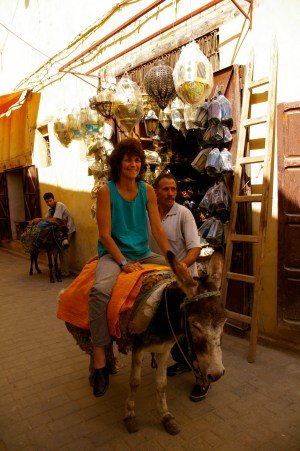
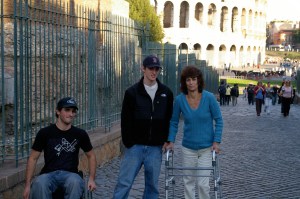
Those who know Jackie best describe her resilience and determination, and these two qualities, along with her sense of humor, have helped her reclaim her life. She is back at work “more than” full-time and recently got back from a trip to Rome and Morocco with her husband. Her son called the donkey “Mom’s Moroccan wheelchair.” Read more of Jackie’s inspirational recovery here

— Here are pictures of Jackie on her trip; She had been told she would be  quadriplegic:

donkey-and-me6a-stroll-through-the-forum-with-huw-and-max-rolling1

Continue reading

6 Comments

Filed under Chronic Pain, Healing, Stories of Hope, Uncategorized

FDA and the Cold Shower Remedy

The U.S. Food and Drug Administration has written that “It’s not chicken soup. Believe it or not, a much more unorthodox therapy of warm-and-cold showers has recently been proposed–though not proven–for the prevention of the common cold.” The article goes on to identify water therapy researcher Edzard Ernst, M.D., who wrote  about shower therapy: “An efficient, practical and inexpensive prophylaxis [preventive measure] against one of the most frequent (and ‘expensive’) diseases has been identified at last.” In a 1987 research study comparing a “cold shower”group with a control group for 6 months, Ernst found that the cold shower group’s colds were “significantly fewer, significantly milder, and slightly shorter.”

Well, even if not “proven” to the FDA’s satisfaction yet, cold showers are worth considering as flu season looms ever closer, and here is some research evidence. As noted before in this space, however, cold showers may not be for you if you have uncontrolled high blood pressure or a circulation problem, so always check with your doctor first!

35 Comments

Filed under cold shower health benefits, colds and flu, Health, Water

Walking from the Heart

This fall, I participated in the American Heart Association HeartWalk in Boston. This was significant for me on several levels: I did the walk with my two children, now 25 and 21. These are children  I was not supposed to have— according to the doctors I had seen when I was growing up—because the stress of pregnancy and childbirth was considered too much for a heart compromised by Marfan Syndrome. But thanks to the  skill and watchful care of a wonderful cardiologist, I was able to thrive through two pregnancies (with planned C-sections), and rejoice with my husband at the birth of our children, who are now well-launched in their own lives and continue to be two of the joys of ours.

The HeartWalk was also significant because I was actually able to complete two of the miles without pain—thanks to the benefits of “physical therapy boot camp” and my new program of regular gym workouts. Again, I feel as if I have “outwitted” some of the usual problems of Marfan Syndrome—joint pain— as long as I am faithful to the exercise routine. Walking that distance was meaningful for another reason: In 1995 I had mitral valve replacement surgery and woke up with half my body paralyzed by a stroke caused by a wayward piece of tissue that had lodged in my brain. I recovered by using integrative medicine (another story), so doing this walk without a cane or other assistance was particularly sweet!

Last—and certainly not least—my family and I walked on the HeartWalk team of the very cardiologist who, 30 years ago, heard and understood how important it was for my husband and me to have children, and who helped make our dream come true. Now, all these years later, here is the result. As I look back on the past 30 years, I realize even more how imporant it is not only to “own our health,” but also to find the right medical partners to help us.

8 Comments

Filed under Boot camp, Chronic Pain, Health, heart arrhythmia, Marfan Syndrome, Pregnancy, stroke

Sleepless, With Wet Socks

If you can’t sleep because you are worrying about the economy, the state of the country, or anything else, try wet socks: a seemingly magical solution to insomnia! Integrative physician and expert in European Natural Medicine Alexa Fleckenstein, M.D., explains:

Of all the weird alternative cures, this must be the weirdest – wet socks against insomnia. No sane person would believe in witchcraft like this. Yet everyone who tries it declares, “But it works like a charm!”  Including me.
This is how it goes: You need a thick towel or two, and two pairs of socks, preferably one woolen, one of cotton.
You wet the cotton socks with cold water (just as it comes from the faucet). You wring them lightly and put them on. Over the wet socks, you pull the dry woolen socks. You go to bed and wrap your feet in one or two towels. You switch off your light.
Quite probably, the next time you look up, it is morning – and you slept like a baby. The swaddling might be part of why the Wet Socks work so well against sleeplessness: They return you instantly to your pampered childhood and blissful sleep.
There is another factor, too: Scientists tried to find out which parameter was linked to good sleep. As many as they tried – like empty stomach, dark room, white noise, milk as a night cap, counting sheep, and so on – one factor was consistently linked to NOT sleeping: cold feet. And the Wet Socks, as cold and uncomfortable as they sound, really turn your feet toasty warm in no time.
No, I didn’t invent it. Credit Sebastian Kneipp (1821-1897) with finding this solution to insomnia long before modern science proved him right. Give it a try!

If you want more details, check out Fleckenstein’s book.

6 Comments

Filed under Insomnia, Sebastian Kneipp, Water, wet socks

Stress and Disease: An Important Connection

I heard a fascinating radio interview today with Dr. Ester Sternberg, a rheumatologist, researcher, and author of “The Balance Within,” a book about the ways in which the brain, mind, and body interact.  I completely agree that our  minds, brains,and bodies are intimately connected: When the mind perceives something as stressful, a cascade of  hormones, such as cortisol and adrenaline, are released. This is useful when you need to slam on your brakes to avoid a collision, but harmful if these hormones are not “switched off” when the stressful situation is over. Stress hormones flooding your body for days or weeks at a time depress your immune system, leaving you more open to disease. In the interview, Dr. Sternberg clearly explained the biochemistry underlying the connection between stress and disease.

All the more reason to practice yoga, Tai chi, and meditation and try to reduce the sources of stress in our lives! I must always add, of course, that if one is ill, it is important to recognize that certain diseases are simply beyond our control, and NOT to feel a sense of “failure” about somehow having the “wrong” state of mind. At the same time, there is always hope and the possibility of becoming whole, and living fully in every moment.

This is an excerpt from an article that Dr. Sternberg wrote on the subject with Philip W. Gold.

The brain and the immune system continuously signal each other, often along the same pathways, which may explain how state of mind influences health The belief that the mind plays an important role in physical illness goes back to the earliest days of medicine. From the time of the ancient Greeks to the beginning of the 20th century, it was generally accepted by both physician and patient that the mind can affect the course of illness, and it seemed natural to apply this concept in medical treatments of disease. After the discovery of antibiotics, a new assumption arose that treatment of infectious or inflammatory disease requires only the elimination of the foreign organism or agent that triggers the illness. In the rush to discover antibiotics and drugs that cure specific infections and diseases, the fact that the body’s own responses can influence susceptibility to disease and its course was largely ignored by medical researchers.

5 Comments

Filed under Healing, Health, mental health, stress, Tai Chi, Uncategorized, Yoga

Diabetes – a Low-Energy Disease

There is more to diabetes than elevated blood sugars; fat metabolism plays an important role as well. Since there has been quite a bit of discussion on this blog about Type II diabetes, especially in relation to being overweight, I have asked integrative physician Alexa Fleckenstein M.D. to explain the approach she has used successfully with her patients. Here is her response:

Conventional medicine manages diabetes – but it doesn’t cure it The conventional view of diabetes mellitus is as a disease of too much sugar in the blood. The medications designed to help the disease consequently lower blood sugar levels – by different mechanisms.

More recent research seems to imply that diabetes is more than elevated blood sugars – fat metabolism seems heavily involved too. But from the patient’s perspective, it looks like diabetes is a disease of too much appetite: Diabetics are hungry all the time. Ten percent of Type II diabetes patients are not overweight – but ninety percent are. Diabetes could be called a disease of abdominal fat leading to abominable consequences. Its poetic name honey-sweet (urine) flow certainly does not evoke the horrible consequences of this disease: amputations of limbs, blindness, kidney failure and dialysis, impotence, cancer, depression – to name a few.

But even in the light of these abominable consequences patients don’t stop eating. Diabetes is a billion dollar business for physicians and the pharma industry – no wonder a cure has not been found yet. And the patients “just won’t listen” to dietary advice. Why do they keep eating? Sebastian Kneipp (1821-1897) used to say “Large dinners fill coffins” – yet Sebastian Kneipp himself was overweight and could not refrain from eating his beloved dumplings, clearly unable to heed his own advice.

I am always struck by how much diabetics suffer when I talk to them. They seem to suffer from a profound fatigue – and eating seems to help. At least for a short while. They eat for energy. People have to make a living, take care of a family – and they are in a race to eat so they can function.

It turns out that diabetes affects the mitochondria, the energy factory of the cells – and diabetes reduces the energy output of the mitochondria. It is as if diabetics stack wood around the mitochondrial stove until that stove – buried under fuel that can’t be used – is unable to function any longer. Paradoxically, all the food hinders proper metabolism, and each too-large meal leaves the patient weaker and sliding further down the precipice to diabetic diseases. All that stoked wood is a fire hazard: Any moment the little energy factory can blow up into a catastrophic illness like heart attack, stroke or infection.

The low energy of diabetics affects their physical as well as their mental abilities. Exhausted as they are, diabetics scramble to make it through their daily activities – they just can’t face going to the gym as well . Of course, exercise would use up some of the stacked fuel and reduce the fire hazard – but they can’t bring themselves to move. Period.

Diabetics have the odds stacked against them even beyond poor mitochondrial function. I can think of several other mechanisms that would explain why diabetics overeat: Studies have shown that overweight people have different bowel bacteria than slim people, which means that the bacteria are craving their food. I liken it to a computer virus: The bacteria send their cravings to the patient’s brain and, obediently, the patient grabs for another piece of unhealthy junk. Furthermore, the abdominal fat is of a different quality than fat of other body parts: Abdominal fat sends out hormonal messages to the brain – again asking for more food since the fat cells need to be fed in order to grow.

Another strike against overweight people is that the more you eat, the hungrier you get. In times of scarcity such a mechanism that helped people survive. In lean times, one was less hungry; in times of gluttony (say, a mammoth needed to be devoured) people had more appetite. Nowadays, when lean times never occur, the overweight just suffer from incredible hunger pangs – which are largely not acknowledged by the medical community but are chalked up to “lacking willpower.”

Then there are food cravings induced by food allergies. We do not really know why this is so, but there is no doubt in my mind that you crave exactly the food you should not eat because it makes you sick. People usually don’t crave carrots and apples – they crave cheese and Twinkies and chicken wings.
And the above are just the innate reasons why overweight people cannot stop eating. Now consider the reasons which stem from our modern food production: New molecules are so alien to our bodies (either by themselves or in unnatural combinations) that more people than ever are experiencing food allergies – and food cravings. High fructose corn syrup and overly processed milk proteins lead the list, but artificial colors, artificial dyes, preservatives and altogether newly designed molecules are not far behind.

And the food industry uses to its advantages the ingredients people have a hard time saying “No!” Fat, sugar, salt make any food more yummy, regardless of its real nutritional value – which is usually nil.

In conclusion, diabetes is a genetic disease so with the above odds keeping up the damaging weight, diabetics have only one chance: To force “unnatural” changes on themselves, against their inclination. For the time being, medicine is no help – the pill that takes away those too large appetites has not yet been invented. So, this needs to be done: Feel your belly right now. If it is bulging at all, you are overweight. Then take your strenuous path: Get off the chair, away from the computer or TV, and start moving. And every time you want to eat, “need” to eat, grab your fat and convince yourself that you won’t starve if you don’t eat this moment. Keep to a schedule (three big meals or five small – but never a bite after dinner because the night is repair time for the body) and find a friend to walk with you – or kayak or swim or dance! This is your only chance for good health.

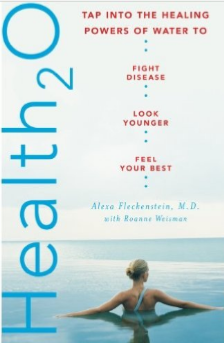
-Alexa Fleckenstein, M.D. author: Healthy to 100 and Health 2 0

94 Comments

Filed under diabetes, Healing, Health, weight loss

Healing Arts for Marfan and Chronic Pain

I recently helped to organize a Healing Arts workshop for the National Marfan Foundation annual meeting, which was held in Boson this year. More than 30 participants heard and asked questions of a panel of complementary/alternative practitioners who discussed managing the symptoms of Marfan syndrome—particularly chronic joint pain—with Tai chi, the Alexander Technique, acupuncture, Traditional Chinese Medicine (TCM), nutrition, and craniosacral therapy. Combining alternative treatments with conventional care is called “integrative medicine,” and putting together your own personal healing combination is an excellent way to take responsibility for your health. These healing modalities have applications for anyone suffering from chronic pain.

The workshop began with Tai chi and Alexander teacher Jamee Culbertson leading us in the opening movements and breathwork of a Tai chi form that is thousands of years old. Research has found that these ancient, graceful, meditative movements improve balance and reduce falls. As we breathed deeply and moved slowly in unison, the room seemed to transform into a kind of “sacred space,” as the group united with a shared purpose and energy. With two volunteers, Jamee then demonstrated how the Alexander Technique reduces pain and eases body movement through simple awareness of habitual actions that may be restricting activities. Both Tai chi and the Alexander Technique are gentle, non-invasive practices, and do not stress joints or ligaments.

Eurydice Hirsey, a trained chiropractor and craniosacral therapist, then talked about the use of craniosacral therapy to ease pain and improve movement by enhancing the circulation of cerebrospinal fluid. This is done through gentle touches on the head and sacrum, following the body’s own natural rhythms and movements, without force or pressure. While chiroporactic may not be indicated for most people with Marfan syndrome, the light touch of craniosacral therapy can ease tight muscles and reduce pain, even in those who have had spinal fusions, by focusing on other areas of the body where movement is possible.

Acupuncturist and researcher Stephen Cina shared his orthopedic investigations into the nature of connective tissue and its possible relationship to the meridians (energy pathways) used in Traditional Chinese Medicine. A practitioner either inserts tiny needles into “points” on the skin that correspond to the energy meridians (the needles are usually painless), or applies pressure with the hands (acupressure) on these same spots, in order to reduce pain. And naturopathic intern Amanda Daeges–who has Marfan syndrome, talked about maintaining integrity of connective tissue through what we eat and drink: specifically whole foods and whole grains that include nutrients and trace minerals. She also stressed the importance of drinking enough water. (Divide your body weight in half to find out how many ounces of water you should drink each day.)

All of these complementary modalities (and many more) are described in detail here, has well as profiles of practitioners and personal experience stories.

VERY important: Before you try any complementary/alternative practices, always check with your doctor.

6 Comments

Filed under acupuncture, Alexander Technique, Chronic Pain, Health, Marfan Syndrome, Tai Chi, Traditional Chinese Medicine

Foxglove: History and Medicinal Uses

There has been a great deal of interest on this blog lately about the foxglove plant, so I asked herbal expert and integrative physician Alexa Fleckenstein, M.D., to give us some background. Here is what she wrote:

Foxglove is a beautiful plant in the garden – it likes a moist soil. The pinkish bells on graceful spikes cheer me up. Moreover, it self-seeds when it likes its home – carefree summer joy. It seems.

Foxglove is also one of the deadliest plants when ingested. The powerful medication digitalis has been derived from the plant to help ailing hearts. The story goes that William Withering (1741-1799) became aware of people self-medicating the “dropsy” (body swelling from what we now call congestive heart failure) with this plant; he then searched for the “active” ingredient and found it in digitalis.

Digitalis is safer than the mother plant because in a plant it is difficult to gauge the poisonous quantity the patient is ingesting. Even with digitalis, we physicians rely on a blood test to tell us whether the patient is receiving a safe dose. We say the therapeutic margin is narrow – which means it is but a small step between digitalis helping the heart and digitalis killing the patient.

For these reasons, I would not recommend adding foxglove into your home herb chest. Better to rely on herbs that are safe. With my patients I rely on herbs that have a large therapeutic margin. It is close to impossible to kill yourself with peppermint, for instance (don’t try at home – because, as Paracelsus knew, every single agent in the world can become poisonous if we ingest a large enough dose of it; sugar is a prime example; even water!).

How do we know an herb is safe? Often, they have been tested through centuries or millenniums of use. One person who developed a list of about one hundred safe herbs was Sebastian Kneipp (1821-1897). Better known for his “cold water cure,” Kneipp had learned about plants from his mother, who was the herbalist of the little village in Bavaria where he grew up. He tried to get away from the cold water (a long story, which I will tell you another time!), and therefore systematically searched for herbs that people could use for themselves, experimenting on himself for safety. Nowadays, science has better tools to examine an herb. Of the about one hundred herbs Kneipp had deemed safe, only abut three were removed from the list by the famous Commission E (which studies herbs for safety and efficacy in Germany).

The “safe” herbs can – and should – be used for everybody. And they should be taken whole – in a reputable tincture or a tea – and not manufactured and put into a pill. Because the plants have evolved with us over millions of years; their biochemistry fits into our physiology like a key in its lock. The many different compounds of a plant work in “synergy” (all for the same purpose – or: The sum is more than its parts. If you are interested in herbal synergy, I have written about it in my book).

Beautiful as it is, foxglove is an example of an unsafe plant – it belongs only in the hands of an experienced herbalist or your doctor. So content yourself with admiring the lovely foxglove flowers, and make yourself a nice cup of soothing herbal tea. Try lemon balm!

More about “the power of the flower.”

6 Comments

Filed under Health, heart arrhythmia, Herbs, Sebastian Kneipp, Uncategorized, Water

Cold Water for Babies?

Rose asks an interesting question about whether to use cold water for babies. Here is an answer from Alexa Fleckenstein, M.D., my cold water expert and the author of Health 2 0:

Dear Rose,
Yes, you can apply cold water to babies. This is done in the tradition of European Natural Medicine to raise strong, robust children.
When my son was four months old, I started him. I filled his little pink tub with cold water, cradled the naked baby in my hands and very quickly dunked him in—but not his head. It took a second or so. For babies, the head always stays outside the water.
He took a deep gasp but never cried. He was so astonished about what had happened and so busy with thinking that he never had time to protest.
Can’t remember when I stopped it – but certainly I would not force a protesting toddler under cold water.
Now that our son is a young man, he follows the family tradition and ends each warm shower with a cold one, and he has become a healthy outdoorsman.

Tell us how your baby likes it!
Alexa Fleckenstein M.D.

You can see all comments on this post here:

23 Comments

Filed under children's health, cold shower health benefits, Healing, Health, Uncategorized, Water

Weeds for Health: Live from Your Garden!

The summer solstice is a wonderful time to harvest nourishment from your garden. I caught up with herbal expert Alexa Fleckentein, M.D., just coming in from her garden with an armful of grapevines (vitis vitifera), considered a bad weed here in the Northeast. “I used to swear and mutter when I pulled them out,” says Dr. Alexa. “Now I delight: A study has shown that grape leaves are even higher than red wine in resveratrol, a phytoalexin known to prolong life and prevent cancer.” The Greeks have been making little dolmades from grape leaves—stuffed with rice, herbs and pine nuts – for thousands of years. Dr. Alexa’s cooking method is simpler: She adds the grape leaves to her vegetable stir-fry (recipes in her book), and freezes them to use all winter long. “Simple, cheap, and healthy,” she says.

If you live in the South, advises Dr. Alexa, you might substitute kudzu (pueraria montana). “Kudzu has some marvelous properties too,” she says. “It is high in vitamins A and C, and also contains calcium. It comes in handy as an anti-inflammatory food (and is a much better source of calcium than inflammatory dairy products). Everybody in the South complains about this obnoxious weed. How about eating it as a revenge?”

And when you are done with your stir-fry, enjoy Dr. Alexa’s famous Garden Tea, described in her book and in this article. “I throw all the other edible weeds in my garden—as well as many plants and flowers—into my daily Garden Tea, which is filled with the healing properties of Nature’s pharmacy,” says Dr. Alexa. “Everything that’s not poisonous can go in there – from kitchen herbs to dandelions, from rose petals to pine needles. But REALLY: You have to know what you are doing and what to avoid. One hundred percent!!” Details are in her book, but she strongly advises taking an herb course to be sure you know what NOT to include!

The first time I made Garden Tea, for example, I proudly threw in a hydrangea flower—it was so pretty! Then I called Dr. Alexa while it was steeping to check on whether this was OK to include. “Throw the whole tea away!” she commanded at once. “Hydrangea leaves and flowers are poisonous.” I was sad to see it go, but I head learned my lesson: When in doubt, throw it out!

2 Comments

Filed under Cancer, Healing, Herbs