Cold Showers: What’s the Evidence?

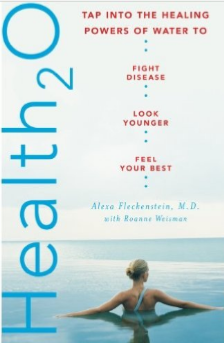
Some people have questioned the evidence behind hydrotherapy, especially the cold water treatments that are described in the book that Alexa Fleckenstein and I co-authored. German research supports the effects of cold water used on the skin as therapy. Unfortunately, the studies are in German, and they are small. (1) Because Pharma firms have no interest in inexpensive water cures, there probably won’t be big studies any time soon. Fact is, the German insurance system pays all or part of physician-prescribed treatments, including hydrotherapy and herbs. The importance and therapeutic potential of water, and especially cold water, are now simply taken for granted in Germany.(2) Here are some specific research studies supporting the health benefits of cold water treatments. Citations are listed at the end. (More cold water research details in Own Your Health (2003)

Boosting the immune system
A pilot study of immune effects from cold water therapy with a small number of breast cancer patients found significantly increased disease-fighting cell counts in every category examined, including neutrophils, lymphocytes, monocytes.(3)

Reducing the perception of pain
In a study in Japan, cooling by ice water was one of the “competitive stimuli” that reduced the perception of the pain of a laser beam on the skin. (4)

Improved circulation and function in the legs
A Swedish group administered three weeks of alternating cold and hot hydrotherapy to the legs of patients suffering from intermittent claudication (reduced blood flow) and found that improved systolic blood pressure in ankles and toes, reduced pain, and markedly better walking ability went beyond the results of standard treatment and persisted for at least a year after treatment.(5)

Swimming in the winter?
Ten healthy subjects who regularly swim during the winter were evaluated at Berlin’s Institute of Biochemistry at Humboldt University Medical School. Their blood and urine showed increased levels of anti-oxidants, which prevent cell damage, indicating their bodies’ increased tolerance to stress.(6)

(1)Summarized in Bühring, M., Naturheilkunde: Grundlagen, Anwendungen, Ziele (Natural Medicine: Basic Application and Goals), Munich, Verlag CH Beck, 1997.
(2)Haas, S.S., Hydrotherapy and more: Adapting Kneipp’s Natural Medicine to the U.S., Complementary Medicine for the Physician, 2000; 5(8):57,61-64.
(3)Kuehn, G., Sequential hydrotherapy improves the immune response of cancer patients. In: Mizrahi A, et al., (eds.) Potentiating Health and the Crisis of the Immune System: Integrative Approaches in the Prevention and Treatment of Modern Diseases. New York: Plenum, 1997.
(4)Kakigi R., et al. Pain relief by various kinds of interference stimulation applied to the peripheral skin in humans: pain-related brain potentials following CO2 laser stimulation. J peripher Nerv Syst 1996;1:189-198.
(5)Elmstahl, S. et al., Hydrotherapy of patients with intermittent cluadication: a novel approach to improve systolic ankle pressure and reduce symptoms. Int Angiol. 1995;14:389-394.
(6) Siems, W.G., et al., Uric acid and glutatione levels during short-term whole body cold exposure. Free Radic Biol Med. 1994;16:299-305.

56 Comments

Filed under Chronic Pain, cold shower health benefits, Healing, Health, Water

Extraordinary videos of babies in the womb

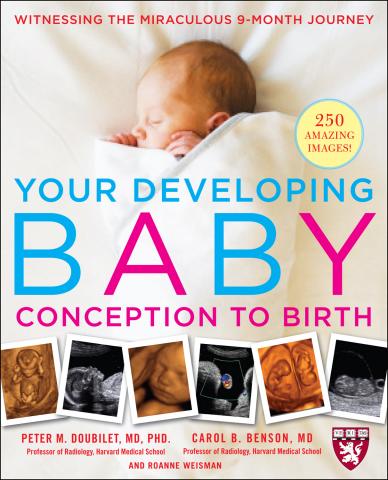
Two new videos have been added to the Your Developing Baby website showing two- and three-dimensional images of babies moving in the womb. Unless you’ve been spending time in an ultrasound room, you have never seen anything like this. (Just click on the “Video” button along the top bar.)

5 Comments

Filed under Health, Pregnancy, Ultrasound

Paying for alternative treatments

Research is increasingly demonstrating the effectiveness of certain complementary/alternative treatments such as acupuncture, massage, tai chi, yoga, meditation and biofeedback for chronic pain, reduced mobility and other ailments. Why then are more insurance companies not paying for them? I think more of us need to “vote with our feet” by demanding coverage for proven alternative treatments and switching to insurance companies that pay for them. We and the health care system will all benefit. As one study found, support for lifestyle changes that prevent disease is far cheaper than hospitalization and expensive pills!

2 Comments

Filed under acupuncture, Chronic Pain, Health, Tai Chi

Our Lives Were in Our Hands

This is the title of an article I wrote for the current (May) issue of Prevention Magazine. It is about three women, myself included, who overcame medical catastrophes: stroke, Crohn’s disease, cancer, kidney failure. Writing these stories has convinced me yet again about the power that each of us has to “own our health.” Yes, there are times when an illness or injury is just too overwhelming, and it may be right for the person to let go. I have the utmost respect for people making that decision. At the same time, I always like to think of the possibilities of hope and fighting back, at least to increase our chances of recovery.

2 Comments

Filed under Cancer, Crohn's, Healing, Health, stroke

Boot Camp for Back Pain

A relatively new approach to chronic back pain is beginning to make headway into mainstream medicine: It is called “physical therapy boot camp” and I am in my fourth week of the program run by New England Baptist Hospital. The results, at least for my Marfan-related back pain, are miraculous. For the first time in what seems like years, I can walk longer and engage in daily life activities without pain in my lower back and hip. It takes work, rather than popping pain pills (which I don’t take): I go twice a week for directed stretching and an hour of closely supervised weight training on gym machines, with steadily increasing weights and repetitions. At home, I follow their program of stretching, walking and weights. And it is really working. This is going to become a regular part of my life.

2 Comments

Filed under Boot camp, Chronic Pain

Weight Loss and Cold Water: Wishful Thinking

March 22 was World Water Day. So this is a good time to think about the meaning of water in our lives and the worldwide threats to our supply of clean water. To that end, Alexa Fleckenstein, M.D., this site’s resident “water doctor,” discusses the latest water-related craze: “thermogenesis”, which asks the question: Can drinking cold water help you lose weight? Here are her thoughts:

A new study claims that drinking cold water uses up calories, by thermogenesis —a fancy word for heat production. The study showed that about two thirds of the calories you use up when drinking cold water are expended to warm up the water to body temperature. And one third is used up by increased metabolism, triggered by stress hormones such as adrenaline (the “fight-or-flight” hormone).

Cranking up metabolism to burn up calories may sound like a good idea, but flooding our bodies with stress hormones is not what we need in our stressed-out times. To make matters worse, cold water inside your body clamps down the blood vessels in the stomach, hindering digestion. And since we are already a nation with rather compromised digestive systems, this is a high price to pay for weight loss.

The numbers cited in the study are not impressive: By drinking a pint of cold water, you lose 25 food calories. A similar study done a year ago used even colder water—ice cold—and found that you would have to drink 400 glasses to lose one pound. And this minimal weight loss does not come from losing subcutaneous or abdominal fat (the fat you want to lose).

Talking about losing weight by thermogenesis means not talking about the weighty elephant in the room: The combination of too many calories and not enough exercise. One tablespoon of sugar has exactly those 25 calories that you lose by drinking a pint of cold water. Sounds good? Not if you compare it to a can of soda: up to 150 calories. Or a candy bar: same. Or a portion of ice-cream: about 300. Or a slice of pizza: about 350.

When it comes to weight loss, there is no silver bullet—or silver ice cube—that will magically melt off the pounds. You can, however, crank up your metabolism with a hot bath, and end it with a cold shower to lose a few calories (so few it is only worth mentioning to counter this cold water weight loss craze). You’d be better off following the “freshness pyramid” weight loss program described in my book to fill your body with foods that are bursting with both water and nutrition. But when you drink your water, forget “thermogenesis” and keep it safely at room temperature!

13 Comments

Filed under cold shower health benefits, Obesity, Water, weight loss

For a Friend Who Died of Marfan Syndrome

Cleaning out an old filing cabinet, I came upon a poem I had written 24 years ago, just after I had given birth to my first child, Benjamin. This spring, he will be married. His younger sister, Elizabeth, will be the maid of honor.

For a Friend Who Died of Marfan Syndrome

Let my baby be hers, too

Let him have grown in her virgin womb

suckled at her empty breast

Let me love him for her

who yearned to create

Let me rejoice in his beauty, the small exploring hands

the fervent mouth

the wetness of which

she will never feel

Let me tingle with the

joy, the freshness, the pain

of living with the same disease that killed her

Let me do this in her honor, in her memory

Her time is over

8 Comments

Filed under Marfan Syndrome

Believing is Seeing

While it may not be sufficient, belief in one’s own ability to recover from serious illness certainly appears to be an important factor. I recently came across an interesting 2004 article by Stanford psychologist Alfred Bandura, Ph.D., in which he argues convincingly that:

“Belief in one’s efficacy to exercise control is a common pathway through which psychosocial influences affect health functioning. This core belief affects each of the basic processes of personal change—whether people even consider changing their health habits, whether they mobilize the motivation and perseverance needed to succeed should they do so, their ability to recover from setbacks and relapses, and how well they maintain the habit changes they have achieved.”

I know that my own recovery from a paralyzing stroke centered on my belief that I had the power to influence my health, and every patient I interviewed for my Own Your Health book said the same thing. Belief may not always work, but it sure gives us a fighting chance! Here is the citation for Bandura’s article, which is called “Health Promotion by Social Cognitive Means.” Health Education & Behavior, Vol. 31, No. 2, 143-164 (2004) DOI: 10.1177/1090198104263660.© 2004 Society for Public Health Education.

5 Comments

Filed under Healing, Health, stroke

Why I Like Tai Chi

The slow, flowing movements look like a dance, but it is what goes on inside the body that makes Tai chi different: During a class recently, I felt as if my body were getting hooked up to a universal “filling station” and being replenished with energy. The result? Better ease of movement, increased flexibility and a sense of peaceful well-being. I do a “short form” almost every morning that takes all of ten minutes, one of the helpful ways I have found to live with Marfan syndrome.

Tai chi originated thousands of years ago as part of the ancient system of Traditional Chinese Medicine. The movements have their origins in martial arts, but are performed slowly, with controlled breathing and an awareness of the flow of energy inside the body. Tai chi has been called “moving meditation.”

Studies have found that Tai chi strengthens the immune system and can help with pain caused by osteoarthritis of the knee. In other research, Tai chi has been found to improve balance and coordination in older people, and reduce falls. It can also help with osteoporisis by  increasing bone density.

All in all, not a bad ten-minute investment of time. Anyone else have Tai chi stories to share?

1 Comment

Filed under Aging, Chronic Pain, Healing, Health, Marfan Syndrome, Tai Chi, Traditional Chinese Medicine

FDA says no cold meds for kids under 2- but there are alternatives

Today, the government issued a Public Health Advisory warning parents that over-the-counter (OTC) cough and cold products should not be used to treat infants and children under 2 because of serious and potentially life-threatening side effects, including convulsions, rapid heart rates, decreased levels of consciousness, and death.

So what to do when your baby or toddler has a cold? There are a number of safe alternative treatments in Own Your Health: Your Sick Child, by John D. Mark, M.D., of Stanford University Medical School. These include herbal remedies, saltwater nose rinse, herbal steam inhalation, and anti-inflammatory foods—such as hot blueberry soup.

Leave a comment

Filed under children's health, colds and flu